
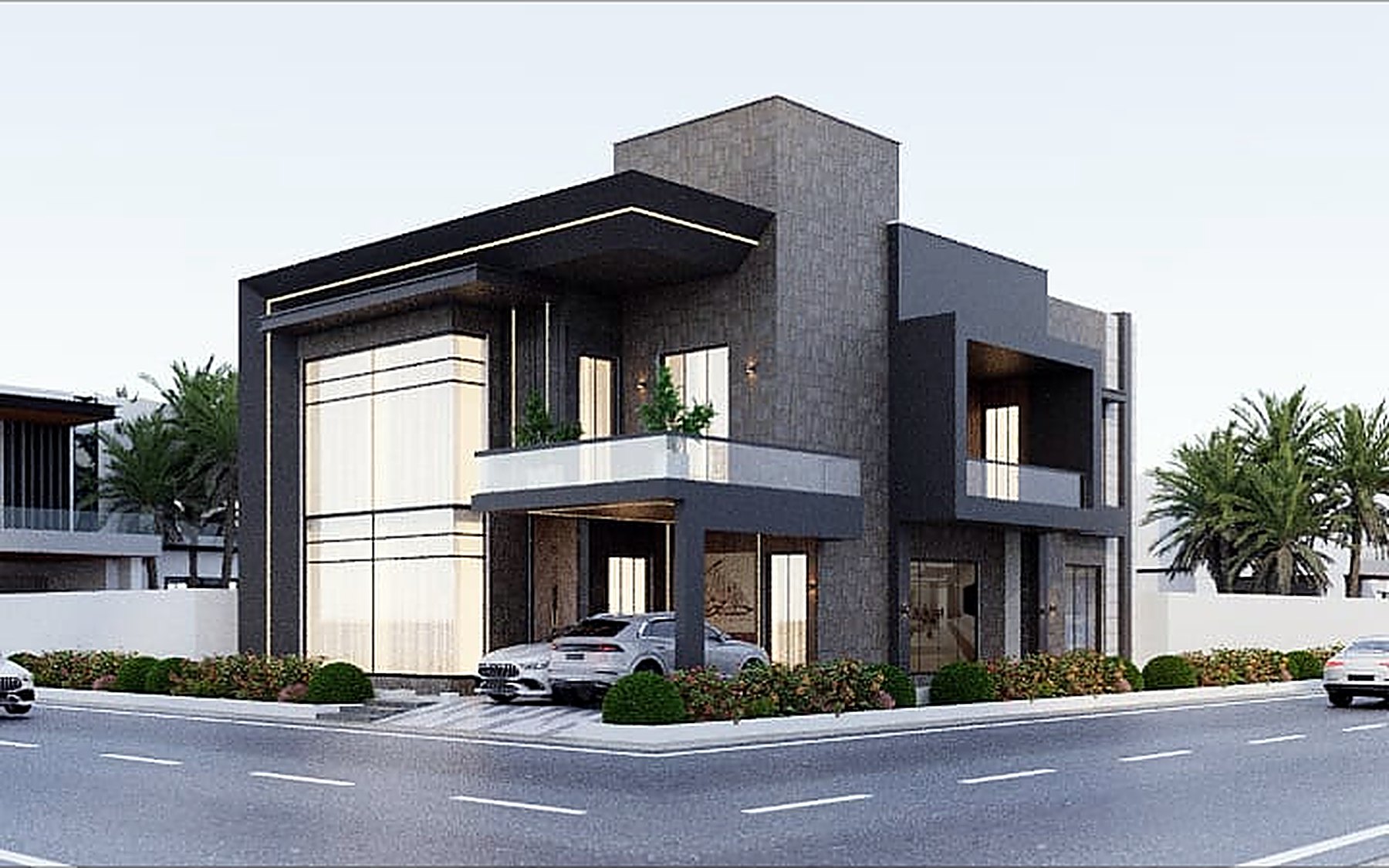
One of the first questions every client asks is simple: ghar ki tameer ka kharcha kitna aata hai — what will it cost to build my home? It is the right question, but it has no single honest answer. Two houses on the same street, with exactly the same covered area, can cost very differently depending on the design, the specification, and the finishes you choose.
Instead of quoting a misleading flat rate, this guide explains exactly what drives the cost of construction in Pakistan — so you can budget realistically and read any quote like a professional.
Why there is no single 'per square foot' price
The popular per-square-foot rate you hear in the market is only a starting reference, not a real price. The actual cost depends on your plot, your architectural drawings, and your finish specification. Anyone who quotes one fixed number without seeing your drawings is guessing — and that guess usually gets corrected (upward) once construction begins.
The honest way to price a home is a Bill of Quantities (BOQ): every item of material and labour, measured against your approved drawings and chosen finishes. Three things change the number more than anything else:
- The plot — its size, shape, soil, and access.
- The drawing — how complex the design and elevation are.
- The finish — how basic or how luxurious your specification is.
The two big cost buckets: grey structure vs finishing
Every build splits into two parts. Understanding them is the key to understanding cost.
- Grey structure (tameer ka dhancha): foundations, columns, beams, slabs, blockwork, and plaster — the steel-and-concrete skeleton of the house.
- Finishing: flooring, tiles, woodwork, kitchen, bathrooms, electrical, plumbing, paint, doors, and the external elevation — everything you see and touch.
Grey structure cost is relatively predictable — it is mostly steel and concrete. Finishing is where budgets swing the most, and it can vary several times over depending on your choices.
Current market rate bands in Pakistan (mid-2026)
As of July 2026, market rate surveys across Lahore, Islamabad, and other major cities put construction in these bands. Treat them as reference ranges, not quotes — your drawings and specification decide where you land within (or beyond) each band.
| Build stage | Typical band (mid-2026) | What moves it |
|---|---|---|
| Grey structure (material + labour) | PKR 2,800 – 4,500 per sq ft | Steel & cement rates, design complexity, soil, basement |
| Finishing | PKR 4,000 – 8,000+ per sq ft | Specification tier — tiles, kitchen, sanitary, woodwork |
| Turnkey (standard A-category) | PKR 6,700 – 8,800+ per sq ft | Grey structure + finishing under one contract |
| Premium / luxury turnkey | PKR 10,000 – 15,000+ per sq ft | Imported finishes, heavy elevations, automation |
Behind those bands sit the two materials that dominate a grey structure. As of late June 2026, reinforcement steel (sariya) trades at roughly PKR 258–265 per kg depending on grade and brand, and cement at roughly PKR 1,350–1,550 per 50-kg bag across major brands. When these two move, every per-square-foot rate in the market moves with them — which is why any quote should state the material rates it assumes.
What drives grey-structure cost
Grey structure is the more predictable half of the budget, because it is mostly steel and cement. The main variables are:
- Steel (sariya) and cement — the largest material inputs, and their market rates move week to week.
- Structural design — long spans, large openings, extra storey height, or a basement all demand more steel and concrete.
- Number of floors and covered area — more slabs and columns mean more cost.
- Soil and foundation type — weaker soil needs a heavier, costlier foundation.
- Boundary walls, underground/overhead water tanks, ramps, and stairs — easy to forget when budgeting.
What drives finishing cost (where budgets really swing)
Finishing is a question of specification, and this is where two identical houses part ways on price. The same room can be finished simply or lavishly, and the difference is enormous:
- Flooring — standard tile vs imported marble or engineered wood.
- Kitchen and wardrobes — local vs imported fittings; laminate vs veneer or solid wood.
- Bathrooms — the number of baths, and the grade of sanitary ware and fittings.
- Electrical and plumbing — number of points and the brand of wiring, switches, and fixtures.
- Doors, windows, and railings — aluminium vs uPVC vs solid wood; glass thickness.
- Elevation — simple paint vs stone cladding, tiles, or aluminium composite panels.
- Ceilings, lighting, and paint grade.
This is exactly why a 'rate per square foot' can only ever be a band. Your finishing choices decide where in that band — or beyond it — you finally land.
Site and design factors most people forget
- Plot size and shape — corner and irregular plots affect how efficiently the design uses the land.
- Drawing complexity — curves, cantilevers, double-height spaces, and heavy elevations cost more to build.
- Location and access — narrow lanes or distant sites raise transport and labour costs.
- Approvals and utilities — map approval, demolishing an old structure, and new service connections.
Material rates change — so timing matters
Steel, cement, and finishing materials are tied to the market and the rupee, so a quote that is accurate today may need revisiting months later. A good contractor either locks key rates in the contract or is transparent about which items are market-linked — so you are never blindsided mid-build.
How to budget your build accurately
- Finalise your architectural drawings first — cost follows design, not the other way round.
- Ask for an itemised BOQ, never a single lump-sum figure.
- Decide your finish tier early — standard, premium, or luxury — and price against it.
- Keep a 10–15% contingency for choices and market movement.
- Compare quotes line by line — the cheapest rate often hides thinner steel or lower-grade finishing.
Get an honest estimate for your home
At MK Builders & Developers, we do not hand out a misleading flat rate. We prepare a clear, itemised estimate against your drawings and chosen specification — for both grey structure and turnkey options — so you know exactly what your money builds.
Whether your plot is in Lahore, Islamabad, Sialkot, or anywhere else in Pakistan, share your drawings and plot details and we will prepare a custom estimate. Get in touch for a free, no-obligation consultation.
Frequently asked questions
How much does it cost to build a house in Pakistan in 2026?
As of mid-2026, grey structure construction runs roughly PKR 2,800–4,500 per square foot and complete turnkey construction roughly PKR 6,700–8,800+ per square foot for a standard A-category home. Premium specifications can reach PKR 10,000–15,000+ per square foot. The exact figure depends on your drawings, plot, and finishing tier.
What is the grey structure rate per square foot in 2026?
Market surveys in mid-2026 put grey structure (material plus labour) between PKR 2,800 and 4,500 per square foot in major Pakistani cities. Design complexity, soil conditions, basements, and the current steel and cement rates decide where within that band a specific house falls.
Why do construction quotes differ so much between builders?
Because they assume different things. One quote may price thinner steel, lower-grade cement, or a cheaper finishing specification than another. The only fair comparison is an itemised Bill of Quantities (BOQ) — line by line, against the same drawings and the same specification.
How much contingency should I keep when building?
Keep 10–15% of your total budget as contingency. It absorbs material rate movement (steel and cement change week to week), design tweaks during the build, and finishing upgrades you decide on once rooms start taking shape.